best film cameras for beginners

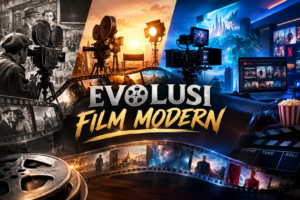
Evolusi Film Modern

Evolusi Film Modern: Perjalanan Sinema dari Era Klasik hingga Teknologi Digital

Film telah berkembang menjadi salah satu bentuk hiburan dan media komunikasi paling berpengaruh di dunia. Melalui perpaduan cerita, visual, suara, dan teknologi, film mampu menghadirkan pengalaman yang menghibur sekaligus membuka perspektif baru bagi penontonnya. Dalam perjalanan panjang tersebut, Evolusi Film Modern menunjukkan bagaimana industri perfilman terus beradaptasi dengan perubahan zaman, mulai dari kamera sederhana hingga kecerdasan buatan. Selain memberikan dampak positif bagi perkembangan seni, perubahan ini juga menghadirkan tantangan baru terkait kreativitas, biaya produksi, dan masa depan industri hiburan.

Awal Mula Perkembangan Dunia Perfilman
EVOLUSI FILM MODERN

EVOLUSI FILM MODERN

Perjalanan Evolusi Film Modern tidak dapat dipisahkan dari eksperimen gambar bergerak pada akhir abad ke-19. Pada masa itu, sejumlah penemu dan pelopor sinema berusaha menciptakan teknologi yang mampu merekam gerakan secara berurutan sehingga menghasilkan ilusi kehidupan. Peralatan yang digunakan masih sederhana, sementara durasi tayangan relatif singkat dan belum dilengkapi suara. Meskipun demikian, penemuan tersebut menjadi fondasi penting bagi lahirnya industri film. Dari eksperimen awal inilah masyarakat mulai mengenal pengalaman menonton yang berbeda dari pertunjukan teater tradisional.

Seiring berjalannya waktu, Evolusi Film Modern semakin terlihat melalui kemunculan tempat pemutaran khusus yang memungkinkan masyarakat menikmati gambar bergerak bersama-sama. Film kemudian berkembang dari atraksi visual menjadi media penceritaan yang memiliki alur, karakter, konflik, dan pesan tertentu. Para pembuat film mulai mempelajari cara mengatur sudut kamera, pencahayaan, serta pergerakan objek untuk menghasilkan pengalaman yang lebih menarik. Perubahan tersebut menjadi langkah positif karena membuka kesempatan bagi sineas untuk menyampaikan gagasan kreatif melalui medium yang mampu menjangkau penonton dari berbagai latar belakang.

Pada tahap berikutnya, Evolusi Film Modern turut dipengaruhi oleh perkembangan teknologi fotografi dan meningkatnya minat masyarakat terhadap hiburan visual. Produksi film mulai membutuhkan perencanaan yang lebih matang, termasuk pemilihan lokasi, pengaturan adegan, dan penyuntingan hasil rekaman. Walaupun keterbatasan teknis masih menjadi hambatan, para pelopor sinema terus mencari cara untuk meningkatkan kualitas tayangan. Berkat berbagai eksperimen tersebut, film perlahan memperoleh tempat penting dalam kebudayaan populer dan berkembang menjadi industri yang memiliki pengaruh besar terhadap seni, ekonomi, serta kehidupan sosial masyarakat.

Peralihan dari Film Bisu ke Film Bersuara

Salah satu perubahan terbesar dalam Evolusi Film Modern adalah peralihan dari film bisu menuju film bersuara. Sebelum teknologi audio berkembang, komunikasi dalam film umumnya mengandalkan ekspresi wajah, gerakan tubuh, tulisan antarlayar, dan iringan musik secara langsung. Para aktor harus menyampaikan emosi melalui gestur yang jelas agar penonton dapat memahami cerita tanpa dialog yang terdengar. Meskipun memiliki keterbatasan, era film bisu melahirkan banyak teknik akting dan penceritaan visual yang masih relevan hingga sekarang. Keunikan tersebut membuktikan bahwa kreativitas dapat berkembang bahkan ketika teknologi belum sepenuhnya mendukung kebutuhan pembuat film.

Ketika teknologi perekaman suara mulai diterapkan secara luas, Evolusi Film Modern memasuki babak baru yang mengubah cara cerita disampaikan kepada penonton. Dialog membuat karakter terasa lebih nyata, sedangkan efek suara membantu membangun suasana yang sesuai dengan situasi dalam cerita. Musik juga dapat diselaraskan dengan adegan untuk memperkuat ketegangan, kesedihan, atau kebahagiaan. Namun, perubahan ini tidak selalu mudah karena studio perlu menyesuaikan peralatan, metode produksi, dan kemampuan para aktor. Sebagian seniman menghadapi kesulitan beradaptasi dengan tuntutan baru, tetapi perkembangan tersebut akhirnya memperluas kemungkinan artistik dalam dunia perfilman.

Selain meningkatkan kualitas komunikasi, Evolusi Film Modern melalui hadirnya suara turut memperkaya pengalaman emosional penonton. Adegan sederhana dapat terasa lebih menyentuh ketika didukung dialog yang kuat, sementara suasana mencekam menjadi semakin efektif melalui efek audio yang tepat. Industri perfilman kemudian mengembangkan standar baru dalam proses perekaman, pencampuran suara, dan penyelarasan audio dengan gambar. Perkembangan ini juga membuka peluang bagi profesi baru, seperti perancang suara dan penyunting dialog. Dengan demikian, teknologi suara bukan sekadar pelengkap visual, melainkan bagian penting yang membentuk identitas film modern.

Perkembangan Warna dan Kualitas Visual

Warna memainkan peranan penting dalam Evolusi Film Modern karena mampu menciptakan suasana, menunjukkan karakter, dan memperkuat makna sebuah adegan. Pada masa awal perfilman, sebagian besar tayangan menggunakan gambar hitam putih, meskipun sejumlah produksi pernah memanfaatkan teknik pewarnaan tertentu. Seiring kemajuan teknologi, proses perekaman warna semakin berkembang dan memungkinkan pembuat film menghadirkan dunia visual yang lebih kaya. Kehadiran warna membantu penonton mengenali detail lingkungan, kostum, serta ekspresi artistik yang sebelumnya lebih terbatas. Perubahan ini memberikan kebebasan lebih besar bagi sutradara untuk mengembangkan gaya visual yang khas.

Dalam perkembangan selanjutnya, Evolusi Film Modern memperlihatkan peningkatan kualitas gambar melalui penggunaan kamera yang semakin canggih dan teknik pencahayaan yang lebih terkontrol. Pembuat film dapat memanfaatkan kontras, temperatur warna, serta komposisi visual untuk menyampaikan emosi tanpa harus selalu menggunakan dialog. Misalnya, pencahayaan hangat sering digunakan untuk menghadirkan suasana akrab, sedangkan warna dingin dapat menciptakan kesan kesepian atau ketegangan. Pilihan artistik semacam ini membuat pengalaman menonton menjadi lebih mendalam. Karena itu, kualitas visual tidak hanya berkaitan dengan ketajaman gambar, tetapi juga kemampuan menyampaikan cerita secara efektif.

Kini, Evolusi Film Modern semakin didukung oleh kamera beresolusi tinggi, teknologi rentang dinamis luas, dan perangkat penyuntingan digital. Pembuat film dapat menghasilkan gambar yang detail sekaligus mengatur tampilan akhir agar sesuai dengan visi kreatif mereka. Meskipun demikian, penggunaan teknologi mahal tidak otomatis menjamin film yang bagus. Cerita yang lemah, karakter yang kurang berkembang, dan penyutradaraan yang tidak konsisten tetap dapat mengurangi kualitas sebuah karya. Oleh sebab itu, teknologi visual sebaiknya digunakan sebagai alat pendukung kreativitas, bukan sebagai pengganti kemampuan bercerita yang menjadi inti dari sebuah film.

Pengaruh Teknologi Digital terhadap Produksi Film

Teknologi digital menjadi salah satu pendorong utama Evolusi Film Modern karena mengubah cara film direncanakan, direkam, disunting, dan didistribusikan. Jika sebelumnya proses produksi sangat bergantung pada media fisik tertentu, kini banyak pekerjaan dapat dilakukan menggunakan kamera digital dan perangkat lunak komputer. Hasil rekaman juga bisa diperiksa dengan cepat sehingga tim produksi memiliki kesempatan untuk memperbaiki kesalahan sebelum meninggalkan lokasi. Efisiensi tersebut memberikan keuntungan bagi pembuat film, khususnya produksi independen yang memiliki keterbatasan anggaran. Dengan perencanaan yang tepat, teknologi digital membantu proses kerja menjadi lebih fleksibel dan terukur.

Selain itu, Evolusi Film Modern semakin terlihat melalui kemudahan penyuntingan menggunakan perangkat lunak profesional. Editor dapat memotong adegan, mengatur ritme cerita, memperbaiki warna, dan menyelaraskan suara tanpa harus melakukan banyak pekerjaan manual seperti pada masa sebelumnya. Proses revisi pun menjadi lebih praktis karena berbagai versi hasil suntingan dapat disimpan dan dibandingkan. Kemampuan ini sangat positif bagi produksi yang membutuhkan ketelitian tinggi. Namun, kemudahan teknis juga dapat menimbulkan masalah apabila tim terlalu sering mengubah adegan tanpa mempertimbangkan konsistensi cerita. Oleh karena itu, keputusan kreatif tetap harus didasarkan pada tujuan naratif yang jelas.

Di sisi lain, Evolusi Film Modern melalui teknologi digital membuat produksi film semakin terbuka bagi kreator dari berbagai tingkat pengalaman. Kamera yang lebih terjangkau dan perangkat lunak yang tersedia secara luas memungkinkan pembuat film pemula menghasilkan karya dengan kualitas yang semakin baik. Mereka dapat mempelajari teknik sinematografi, penyuntingan, dan tata suara melalui sumber pembelajaran daring. Walaupun persaingan menjadi lebih ketat karena jumlah karya yang beredar meningkat, kesempatan untuk menampilkan ide orisinal juga semakin besar. Kondisi ini menciptakan lingkungan kreatif yang dinamis, sekaligus menuntut sineas untuk terus meningkatkan keterampilan agar mampu menghasilkan karya yang berbeda.

Peran CGI dan Efek Visual dalam Sinema

Computer-generated imagery atau CGI memiliki kontribusi besar dalam Evolusi Film Modern, terutama ketika cerita membutuhkan objek, karakter, atau lingkungan yang sulit direkam secara nyata. Melalui teknologi ini, pembuat film dapat menciptakan makhluk fiksi, kota futuristik, ledakan digital, hingga pemandangan yang tidak tersedia di dunia nyata. CGI memungkinkan imajinasi diterjemahkan menjadi gambar bergerak dengan tingkat detail yang terus berkembang. Teknologi tersebut banyak digunakan dalam film fantasi, fiksi ilmiah, dan petualangan. Jika diterapkan secara tepat, efek visual dapat memperkuat cerita sekaligus memberikan pengalaman sinematik yang spektakuler bagi penonton.

Meskipun demikian, Evolusi Film Modern juga memperlihatkan bahwa penggunaan efek visual yang berlebihan dapat menjadi kelemahan. Film yang terlalu mengandalkan CGI tanpa karakter yang menarik atau konflik yang meyakinkan berisiko terasa kosong secara emosional. Penonton mungkin terkesan oleh gambar yang megah, tetapi pengalaman tersebut belum tentu bertahan lama apabila cerita tidak memiliki kedalaman. Selain itu, pembuatan efek visual berkualitas tinggi membutuhkan tenaga ahli, perangkat komputasi, waktu, dan biaya yang besar. Karena itu, sutradara perlu menentukan bagian mana yang benar-benar membutuhkan efek digital dan bagian mana yang lebih efektif dibuat menggunakan properti fisik atau lokasi nyata.

Seiring kemajuan perangkat lunak, Evolusi Film Modern menghadirkan pendekatan yang menggabungkan efek praktis dengan visual digital. Ledakan buatan, kostum khusus, miniatur, dan dekorasi nyata dapat dipadukan dengan CGI untuk menghasilkan adegan yang lebih meyakinkan. Pendekatan hibrida ini membantu mempertahankan kesan fisik sekaligus memberikan kebebasan artistik yang luas. Selain itu, teknologi penangkapan gerak memungkinkan gerakan aktor diterapkan pada karakter digital secara lebih realistis. Kombinasi berbagai metode tersebut menunjukkan bahwa efek visual terbaik bukan hanya soal kecanggihan teknologi, melainkan keselarasan antara kebutuhan cerita, keterampilan teknis, dan keputusan artistik.

Transformasi Genre dan Gaya Penceritaan

Perubahan zaman membawa pengaruh besar terhadap Evolusi Film Modern, termasuk dalam perkembangan genre dan cara cerita disampaikan. Genre seperti drama, komedi, horor, aksi, dan fiksi ilmiah terus mengalami pembaruan mengikuti selera penonton serta perubahan budaya. Para pembuat film tidak lagi selalu terpaku pada batas genre tradisional, tetapi mulai menggabungkan beberapa unsur dalam satu karya. Sebuah film dapat memadukan humor dengan ketegangan, drama keluarga dengan misteri, atau kisah romantis dengan petualangan. Pendekatan tersebut menghasilkan variasi cerita yang lebih luas dan membuka peluang untuk menghadirkan pengalaman menonton yang segar.

Selain penggabungan genre, Evolusi Film Modern juga terlihat dari semakin beragamnya struktur narasi. Sebagian film menggunakan alur maju yang sederhana, sedangkan karya lainnya mengandalkan kilas balik, sudut pandang bergantian, atau penceritaan nonlinier. Teknik tersebut dapat membuat cerita lebih menantang dan mendorong penonton untuk menyusun informasi secara aktif. Namun, struktur yang terlalu rumit tanpa petunjuk memadai berisiko menimbulkan kebingungan. Oleh sebab itu, eksperimen naratif perlu tetap mempertimbangkan kejelasan informasi dan hubungan emosional antara karakter dengan penonton agar inovasi tidak justru melemahkan daya tarik cerita.

Dalam konteks yang lebih luas, Evolusi Film Modern turut mendorong munculnya cerita yang mengangkat identitas, ketidakadilan sosial, kesehatan mental, lingkungan, dan berbagai persoalan kehidupan sehari-hari. Topik-topik tersebut memungkinkan film berfungsi sebagai sarana refleksi sekaligus hiburan. Penonton dapat memahami pengalaman kelompok lain, mempertanyakan pandangan yang sudah lama dipercaya, atau menemukan inspirasi dari perjuangan karakter. Meski demikian, penggambaran isu sensitif memerlukan riset dan kepekaan agar tidak menimbulkan stereotip negatif. Film yang kuat biasanya mampu menyeimbangkan kebebasan artistik dengan pemahaman terhadap konteks sosial yang menjadi latar ceritanya.

Pengaruh Platform Streaming terhadap Industri Film

Kemunculan layanan streaming menjadi bagian penting dari Evolusi Film Modern karena mengubah cara masyarakat mengakses hiburan. Jika sebelumnya penonton perlu datang ke bioskop atau menunggu jadwal penayangan televisi, kini banyak film dapat dinikmati melalui perangkat yang terhubung ke internet. Fleksibilitas tersebut memungkinkan penonton memilih waktu dan tempat menonton sesuai kebutuhan. Selain itu, katalog digital memberikan akses terhadap film dari berbagai negara yang mungkin sulit ditemukan melalui distribusi konvensional. Perubahan ini memperluas pilihan hiburan dan membantu karya dari pasar yang lebih kecil menjangkau audiens internasional.

Dari sudut pandang industri, Evolusi Film Modern melalui streaming membuka peluang distribusi baru bagi produser dan pembuat film independen. Karya yang sebelumnya kesulitan memperoleh jadwal tayang di bioskop dapat menemukan penonton melalui platform digital tertentu. Model ini juga mendorong perkembangan serial dan film dengan pendekatan cerita yang beragam. Namun, terdapat tantangan berupa persaingan perhatian yang sangat tinggi, ketergantungan pada kebijakan platform, serta perbedaan skema pendapatan bagi kreator. Oleh karena itu, akses distribusi yang lebih luas perlu diimbangi dengan strategi pemasaran dan model bisnis yang mendukung keberlanjutan produksi.

Di samping manfaat tersebut, Evolusi Film Modern juga menghadirkan perubahan pada pengalaman menonton bersama. Bioskop tetap menawarkan layar besar, tata suara khusus, dan suasana kolektif yang sulit sepenuhnya digantikan oleh perangkat pribadi. Sebaliknya, streaming memberikan kenyamanan untuk menonton dari rumah dan berdiskusi melalui komunitas daring. Kedua cara tersebut dapat berjalan berdampingan karena melayani kebutuhan penonton yang berbeda. Tantangan utama bagi industri adalah menjaga kualitas karya dan menemukan model distribusi yang adil. Dengan strategi yang tepat, perkembangan platform digital dapat menjadi peluang positif tanpa harus menghilangkan nilai pengalaman sinematik di bioskop.

Kecerdasan Buatan dalam Produksi Film

Kecerdasan buatan atau artificial intelligence mulai memberi warna baru pada Evolusi Film Modern melalui berbagai alat yang mendukung pekerjaan kreatif dan teknis. Teknologi ini dapat membantu mengelompokkan rekaman, membuat transkripsi dialog, menghapus gangguan suara, serta mempercepat proses pencarian adegan tertentu. Dalam tahap pengembangan, perangkat berbasis AI juga dapat digunakan untuk menyusun referensi visual dan mengeksplorasi kemungkinan desain produksi. Apabila dimanfaatkan secara bertanggung jawab, alat tersebut membantu tim menghemat waktu untuk pekerjaan berulang sehingga mereka dapat memusatkan perhatian pada penyutradaraan, penulisan, dan pengembangan karakter.

Namun, Evolusi Film Modern melalui penggunaan AI juga memunculkan persoalan etika yang perlu diperhatikan secara serius. Teknologi generatif dapat menghasilkan gambar, suara, atau gerakan yang menyerupai manusia nyata, sehingga penggunaan tanpa izin berpotensi merugikan aktor, pengisi suara, dan pemilik karya. Selain itu, data pelatihan yang tidak transparan dapat menimbulkan sengketa hak cipta. Risiko lain adalah munculnya konten manipulatif yang sulit dibedakan dari rekaman asli. Karena itu, industri memerlukan aturan yang jelas mengenai persetujuan, kompensasi, perlindungan data, dan pengungkapan penggunaan AI agar inovasi tidak mengorbankan hak individu.

Baca Juga: EDUKASI DUNIA PERFILMAN

Untuk memahami perkembangan tersebut secara lebih menyeluruh, Evolusi Film Modern dapat dipelajari melalui sumber EDUKASI DUNIA PERFILMAN yang membahas teknik pembuatan film, sejarah sinema, serta perubahan industri hiburan. Pengetahuan semacam ini membantu pembaca membedakan penggunaan teknologi sebagai alat pendukung dengan keputusan kreatif yang seharusnya tetap melibatkan manusia. AI mungkin dapat mempercepat sejumlah proses, tetapi pemahaman emosi, pengalaman hidup, dan tanggung jawab artistik tetap memegang peranan penting. Dengan pendekatan seimbang, teknologi dapat menjadi mitra yang bermanfaat bagi sineas tanpa menghilangkan orisinalitas serta nilai kemanusiaan dalam sebuah karya.

Perkembangan Film Indonesia di Era Modern

Perjalanan Evolusi Film Modern di Indonesia menunjukkan bagaimana industri lokal terus menyesuaikan diri dengan perubahan teknologi, kebiasaan penonton, dan kondisi sosial. Perfilman Indonesia memiliki sejarah panjang yang mencakup berbagai periode, mulai dari perkembangan produksi pada masa awal hingga pertumbuhan industri setelah reformasi. Dalam beberapa dekade terakhir, semakin banyak sineas menghadirkan cerita dengan latar budaya, bahasa, dan persoalan yang dekat dengan kehidupan masyarakat. Keberagaman tersebut menjadi kekuatan positif karena memberikan ruang bagi identitas lokal untuk tampil di layar sekaligus memperkaya pilihan cerita bagi penonton di dalam dan luar negeri.

Selanjutnya, Evolusi Film Modern di Indonesia dapat dilihat melalui munculnya film-film dari berbagai genre, seperti horor, drama keluarga, komedi, aksi, dan dokumenter. Para pembuat film semakin berani mengangkat tema yang sebelumnya jarang memperoleh perhatian luas, termasuk pengalaman masyarakat daerah dan persoalan sosial kontemporer. Perkembangan komunitas film serta akses terhadap pendidikan audiovisual turut membantu munculnya talenta baru. Meskipun demikian, tantangan masih hadir dalam bentuk distribusi yang tidak merata, keterbatasan pendanaan bagi sebagian produksi, dan persaingan untuk memperoleh perhatian penonton. Keberhasilan industri tidak hanya ditentukan oleh jumlah penonton, tetapi juga kualitas dan keberagaman karya yang dihasilkan.

Di era digital, Evolusi Film Modern membuka kesempatan bagi sineas Indonesia untuk memperkenalkan karya kepada audiens internasional melalui festival, platform streaming, dan promosi daring. Cerita yang berakar pada budaya lokal dapat memperoleh daya tarik lebih luas apabila disampaikan dengan pendekatan yang kuat dan mudah dipahami. Kolaborasi lintas negara juga dapat meningkatkan pertukaran pengetahuan serta keterampilan produksi. Akan tetapi, pembuat film tetap perlu menjaga keaslian cerita dan menghindari penggambaran budaya secara dangkal hanya demi memenuhi selera pasar. Dengan dukungan ekosistem yang sehat, film Indonesia berpotensi tumbuh sebagai industri kreatif yang berdaya saing sekaligus mempertahankan karakter budayanya.

Dampak Film terhadap Budaya dan Kehidupan Sosial

Film memiliki pengaruh penting dalam Evolusi Film Modern karena dapat membentuk cara masyarakat memahami peristiwa, hubungan antarmanusia, dan persoalan sosial. Melalui cerita yang dekat dengan pengalaman penonton, film dapat menumbuhkan empati terhadap kelompok yang berbeda serta memperkenalkan sudut pandang baru. Karya yang membahas perjuangan, persahabatan, atau ketidakadilan dapat mendorong percakapan yang bermakna di lingkungan keluarga maupun komunitas. Dengan demikian, film tidak hanya berfungsi sebagai hiburan, tetapi juga sebagai medium komunikasi budaya. Dampak positif ini akan semakin kuat ketika cerita disusun dengan riset yang baik dan penggambaran karakter yang manusiawi.

Walaupun demikian, Evolusi Film Modern juga mengingatkan bahwa tayangan audiovisual dapat membawa pengaruh negatif apabila menyajikan kekerasan, stereotip, atau informasi keliru tanpa konteks yang memadai. Penonton yang tidak memiliki kemampuan literasi media mungkin menerima penggambaran fiksi sebagai gambaran utuh mengenai kenyataan. Karena itu, penting untuk memahami perbedaan antara dramatisasi dan fakta, khususnya pada film yang terinspirasi dari peristiwa sejarah. Orang tua, pendidik, dan pembuat film dapat berperan dalam membantu penonton menilai isi tayangan secara kritis. Pendekatan tersebut bukan berarti membatasi kreativitas, melainkan mendorong pemahaman yang lebih bertanggung jawab.

Dalam kehidupan sehari-hari, Evolusi Film Modern juga membentuk tren bahasa, gaya berpakaian, musik populer, hingga cara orang membicarakan isu tertentu. Karakter yang kuat dapat menjadi simbol budaya, sedangkan adegan ikonik dapat dikenang selama bertahun-tahun. Pengaruh tersebut memperlihatkan kemampuan film untuk melampaui batas layar dan menjadi bagian dari percakapan sosial. Namun, popularitas tidak selalu mencerminkan nilai artistik sebuah karya. Oleh karena itu, penonton sebaiknya menikmati film sambil tetap mempertimbangkan kualitas cerita, konteks budaya, serta pesan yang disampaikan. Dengan cara ini, film dapat dinikmati sebagai hiburan sekaligus sumber refleksi yang bermanfaat.

Masa Depan Industri Film dan Inovasi Sinema

Masa depan Evolusi Film Modern kemungkinan akan dipengaruhi oleh perkembangan teknologi imersif, seperti virtual reality, augmented reality, dan sistem audio yang semakin realistis. Inovasi tersebut berpotensi membuat penonton merasa lebih dekat dengan lingkungan cerita dan memperoleh pengalaman yang lebih interaktif. Walaupun belum tentu menggantikan format film konvensional, teknologi imersif dapat membuka bentuk penceritaan baru yang menggabungkan sinema dengan permainan digital. Tantangannya adalah memastikan pengalaman tersebut tetap mudah diakses, nyaman digunakan, dan memiliki tujuan artistik yang jelas. Teknologi yang menarik akan lebih bermakna apabila membantu memperkuat hubungan antara cerita dan penonton.

Selain inovasi visual, Evolusi Film Modern juga akan dipengaruhi oleh kebutuhan industri untuk mengembangkan proses produksi yang lebih efisien dan ramah lingkungan. Penggunaan pencahayaan hemat energi, pengurangan limbah dekorasi, pengelolaan perjalanan kru, serta pemanfaatan perencanaan digital dapat membantu mengurangi dampak lingkungan dari kegiatan produksi. Upaya tersebut semakin relevan ketika industri kreatif menghadapi tuntutan keberlanjutan. Di sisi lain, penerapan teknologi baru perlu memperhatikan kesejahteraan pekerja dan pembagian kesempatan yang adil. Dengan demikian, kemajuan perfilman tidak hanya diukur dari kecanggihan hasil akhir, tetapi juga dari kualitas proses kerja yang mendukungnya.

Pada akhirnya, Evolusi Film Modern akan terus bergantung pada keseimbangan antara teknologi, kreativitas, dan kebutuhan manusia. Perangkat baru dapat membuka kemungkinan yang sebelumnya sulit diwujudkan, tetapi cerita yang bermakna tetap menjadi alasan utama penonton terhubung dengan sebuah film. Industri perlu menjaga ruang bagi eksperimen sekaligus mendukung karya yang sederhana, independen, dan berani mengangkat perspektif berbeda. Jika inovasi dilakukan dengan tanggung jawab, masa depan sinema dapat menjadi lebih inklusif dan beragam. Perjalanan ini menunjukkan bahwa perkembangan film bukan sekadar perubahan alat produksi, melainkan proses berkelanjutan dalam menemukan cara baru untuk menceritakan pengalaman manusia.

Kesimpulan

Secara keseluruhan, Evolusi Film Modern memperlihatkan perjalanan panjang dunia perfilman dari gambar bergerak sederhana menuju karya audiovisual yang didukung teknologi digital, CGI, streaming, dan kecerdasan buatan. Setiap perubahan menghadirkan peluang positif untuk memperluas kreativitas, meningkatkan kualitas produksi, dan menjangkau penonton yang lebih beragam. Namun, perkembangan tersebut juga membawa tantangan, mulai dari persoalan hak cipta hingga risiko berkurangnya perhatian terhadap kekuatan cerita. Oleh sebab itu, kemajuan teknologi perlu disertai pemahaman etika dan komitmen terhadap kualitas artistik agar industri perfilman dapat berkembang secara sehat.

Pada akhirnya, kekuatan Evolusi Film Modern terletak pada kemampuannya beradaptasi tanpa kehilangan fungsi utama film sebagai medium penceritaan. Teknologi boleh berubah, metode distribusi dapat berganti, dan selera penonton mungkin terus berkembang, tetapi cerita yang menyentuh emosi serta membuka wawasan akan tetap memiliki tempat penting. Dengan dukungan sineas kreatif, penonton yang kritis, dan ekosistem industri yang bertanggung jawab, film dapat terus menjadi sumber hiburan, inspirasi, dan refleksi sosial. Inilah alasan mengapa perkembangan sinema layak dipahami bukan hanya sebagai kemajuan teknis, melainkan juga sebagai bagian dari perjalanan kebudayaan manusia.
Best Film Adaptations of Shakespeare

Kenneth Branagh’s Hamlet (1996)

Kenneth Branagh’s unabridged Hamlet is often cited in discussions of Best Film Adaptations of Shakespeare because it dares to present the full text in cinematic form. Shot in 70mm, the film emphasizes visual grandeur, elaborate sets, and expressive performances that help modern audiences follow Shakespeare’s complex language. Branagh’s direction balances theatrical delivery with dynamic camera movement, making soliloquies feel intimate rather than static. The result is a faithful yet accessible interpretation that respects the original play while embracing film as a storytelling medium.

What strengthens this entry among Best Film Adaptations of Shakespeare is the ensemble cast and psychological clarity. Actors like Derek Jacobi and Kate Winslet bring emotional depth that grounds the story in human conflict rather than abstract poetry. Branagh’s choice to set the film in a 19th-century royal environment reinforces themes of surveillance and power. Through careful pacing and visual symbolism, the movie proves that even Shakespeare’s longest tragedy can succeed on screen without sacrificing textual integrity.

Romeo + Juliet (1996)

Baz Luhrmann’s Romeo + Juliet stands out in conversations about Best Film Adaptations of Shakespeare due to its radical modernization. Set in a hyper-stylized contemporary city, the film replaces swords with guns while retaining Shakespeare’s original dialogue. This contrast creates a striking energy that captures youthful passion and impulsiveness. Luhrmann’s rapid editing, pop soundtrack, and vivid color palette make the story resonate with younger audiences unfamiliar with Elizabethan drama.

Within the broader context of Best Film Adaptations of Shakespeare, this film demonstrates how bold stylistic choices can preserve emotional truth. Leonardo DiCaprio and Claire Danes portray the lovers with vulnerability that cuts through the heightened visuals. The modernization highlights timeless themes of violence, family conflict, and forbidden love. Rather than diluting Shakespeare’s intent, the film reframes it, proving that classic language can thrive in a contemporary cinematic environment.

Macbeth (2015)

Justin Kurzel’s Macbeth earns recognition among Best Film Adaptations of Shakespeare for its stark realism and atmospheric intensity. The film emphasizes brutality, grief, and psychological collapse through bleak landscapes and muted color tones. Michael Fassbender’s performance portrays Macbeth as a war-scarred soldier haunted by ambition and trauma. This interpretation aligns Shakespeare’s themes with modern understandings of violence and mental strain, making the tragedy feel immediate and raw.

As part of Best Film Adaptations of Shakespeare, Kurzel’s Macbeth also excels in visual storytelling. Long silences, slow motion battles, and haunting musical cues allow the emotions to linger beyond spoken words. Marion Cotillard’s Lady Macbeth is portrayed with quiet menace and fragility, adding nuance to her ambition. The film shows that reducing dialogue and amplifying atmosphere can still honor Shakespeare’s language and deepen its emotional impact.

Othello (1995)

Oliver Parker’s Othello is frequently included in lists of Best Film Adaptations of Shakespeare because of its focus on intimacy and character psychology. The film narrows its scope to emphasize relationships rather than spectacle, allowing jealousy and manipulation to drive the narrative. Laurence Fishburne’s Othello conveys dignity and vulnerability, making his downfall both tragic and believable. The cinematic approach helps viewers engage with the emotional core of the play.

Among Best Film Adaptations of Shakespeare, this Othello stands out for its portrayal of Iago. Kenneth Branagh’s performance is chillingly charismatic, drawing the audience into his schemes. Close-up shots and subtle expressions reinforce the theme of deception, showing how easily trust can be exploited. By focusing on personal interactions, the film demonstrates how Shakespeare’s exploration of racism, power, and insecurity remains relevant in a modern cinematic context.

Much Ado About Nothing (1993)

Kenneth Branagh’s Much Ado About Nothing offers a lighter entry among Best Film Adaptations of Shakespeare, celebrating wit, romance, and social playfulness. Set in a sun-drenched Italian villa, the film emphasizes joy and communal life. The naturalistic performances and relaxed pacing make Shakespeare’s comedic dialogue feel conversational. This approach helps audiences appreciate the humor and emotional warmth embedded in the original text.
In the landscape of Best Film Adaptations of Shakespeare, this film proves that comedy can be as impactful as tragedy. Emma Thompson’s Beatrice and Branagh’s Benedick deliver sharp banter that drives the story’s charm. The visual brightness mirrors the play’s themes of love and reconciliation. By foregrounding character chemistry and scenic beauty, the film shows how Shakespeare’s comedies translate effectively into cinematic language.

The Lion King (1994)

Although not a direct adaptation, The Lion King is often discussed within Best Film Adaptations of Shakespeare because of its clear parallels to Hamlet. The animated film reimagines themes of betrayal, exile, and rightful leadership in an accessible form. By using animals and music, it introduces Shakespearean ideas to a global audience without relying on original dialogue. The emotional arc remains recognizably tragic and redemptive.
As part of Best Film Adaptations of Shakespeare, The Lion King demonstrates the flexibility of Shakespeare’s narratives. The story structure mirrors Hamlet while reshaping it into a family-friendly format. Themes of responsibility and moral growth replace existential despair, making the tale broadly appealing. This adaptation confirms that Shakespeare’s influence extends beyond traditional cinema, shaping storytelling across genres and generations without losing its thematic power.

Best Film Adaptions

Transforming Written Stories into Visuals

Adapting written stories into films is a complex creative process due to the significant differences in medium. In the context of Best Film Adaptations, directors and screenwriters must be able to translate long narratives into a dense yet meaningful visual language. Every detail of the book’s description must be reworked to convey the visuals, dialogue, and actors’ expressions. The success of Best Film Adaptations is often seen in their ability to maintain the core of the story while adjusting the pace to fit the film’s length.

Beyond technical issues, Best Film Adaptations are also determined by understanding the emotions of readers already familiar with the original story. Audiences expect a fresh experience without feeling betrayed by drastic changes. Therefore, strong adaptations typically don’t simply copy the plot but reinterpret it with a relevant cinematic approach. When this balance is achieved, Best Film Adaptations stand alone as quality films.

The Director’s Role in the Adaptation Process

The director plays a central role in determining the direction of a film adaptation. In Best Film Adaptations, the director’s vision serves as a bridge between the source work and the screen interpretation. Artistic decisions such as camera angles, pacing, and visual tone significantly influence the final result. Directors who understand the original material well are usually able to maintain the spirit of the story while presenting a fresh new perspective for the audience.

On the other hand, Best Film Adaptations also require directors to be brave in making difficult decisions. Not all parts of the original story can be included in the film, so a rigorous selection of the most impactful scenes is necessary. When directors are able to choose important elements without disrupting the story’s structure, the adaptation feels solid. This is why many Best Film Adaptations are remembered for their directors’ skill in crafting narratives.

Character Strength in Film Adaptations

Character is a crucial element in determining the quality of a film adaptation. In Best Film Adaptations, strong characters are able to bridge the audience with the world of the story being presented. Character development must remain faithful to the original nature but be adapted to the film’s dramatic needs. The right actors are often a determining factor in success because they bring the characters from the text to life.

Furthermore, Best Film Adaptations demonstrate that well-written characters will remain relevant even when the medium changes. Character interactions, inner conflicts, and emotional development must be effectively visualized. If characters feel alive and consistent, the audience will more easily accept changes in plot or story details. Thus, character becomes the main foundation in creating memorable Best Film Adaptations.

The Challenges of Adapting a Fictional World

Fictional worlds offer vast freedom of imagination, but they also present significant challenges when adapted to film. In Best Film Adaptations, fictional worlds must be visually constructed with high consistency to feel convincing. Set design, costumes, and even visual effects play a crucial role in creating an atmosphere that matches the source material. A small mistake can ruin the illusion of a constructed world.

Beyond visual aspects, Best Film Adaptations in fictional worlds must also maintain the story’s internal logic. Filmgoers need clear world rules for conflicts to feel plausible. When a fictional world is presented maturely and consistently, the adaptation can appeal to audiences unfamiliar with the original work. This is why Best Film Adaptations in the fiction genre often serve as benchmarks for the film industry’s capabilities.

Balance between Faithfulness and Innovation

One of the biggest dilemmas in film adaptations is determining how faithful to the original source material should be. Best Film Adaptations don’t always mean following the story exactly without change. Innovation is often necessary to make the story feel relevant to the context of the times and new audiences. The right changes can actually strengthen the story’s message and enhance the film’s appeal.

However, Best Film Adaptations also require caution to ensure innovation doesn’t diminish the story’s identity. Fans of the original work typically have a strong emotional attachment. When changes are made with clear rationale and thoughtful execution, adaptations can be well-received. This balance is what distinguishes Best Film Adaptations from adaptations that fail to meet expectations.

The Impact of Adaptations on the Film Industry

Film adaptations have a significant impact on the development of the global film industry. Best Film Adaptations are often major projects with high budgets and extensive promotion. Successful adaptations can boost interest in the source work, whether it be a book, comic, or true story. This creates a mutually beneficial relationship between the film industry and the literary world.

Furthermore, Best Film Adaptations also set new standards in visual storytelling. Successful narrative techniques, artistic approaches, and marketing strategies are often used as references for subsequent projects. Thus, adaptation is not simply a process of media transfer, but a vital part of the evolution of modern cinema. Best Film Adaptations demonstrate how stories can live on and evolve through various forms of expression.

Best Film Directors of All Time

Alfred Hitchcock

Alfred Hitchcock is known as the “Master of Suspense” for his ability to control the audience’s emotions with incredible precision, and his reputation has earned him a place in discussions of the Best Film Directors of All Time. Through films like Psycho, Vertigo, and Rear Window, Hitchcock introduced visual techniques that have become standards for modern cinema. He used the camera as a psychological tool, not simply as a scene recorder, allowing tension to build slowly but linger in the audience’s mind long after the film ends.

Alfred Hitchcock’s influence on film language is still felt today, making him a central figure on lists of the Best Film Directors of All Time. Many subsequent generations of directors have studied his method of manipulating perspective and the information presented to the audience. Hitchcock understood that fear is often more effective when it is not explicitly shown. This approach demonstrated that the power of visual narrative can transcend dialogue, creating a timeless and continually learned cinematic experience.

Stanley Kubrick

Stanley Kubrick is often considered an extreme perfectionist, a reputation that cements him among the Best Film Directors of All Time. His films, such as 2001: A Space Odyssey, A Clockwork Orange, and The Shining, demonstrate his courageous experimentation with narrative structure and visuals. Kubrick never stuck to one genre, instead conquering science fiction, horror, war, and psychological drama with a style that was always distinctive and visionary.

Stanley Kubrick’s unique approach to cinema makes him one of the most frequently analyzed Best Film Directors of All Time. He was known for retaking takes numerous times to achieve the perfect shot, even if it exhausted the actors. This approach resulted in works that felt chilling yet full of symbolic meaning. Kubrick didn’t just tell a story, but also invited audiences to reflect on human existence, power, and alienation through the profound language of film.

Steven Spielberg

Steven Spielberg is an example of a director who managed to combine commercial success with artistic quality, making him a key figure in the Best Film Directors of All Time list. Films like Jaws, E.T., and Jurassic Park shaped global pop culture, while Schindler’s List and Saving Private Ryan demonstrated emotional and historical depth. Spielberg possesses a rare ability to make complex stories feel intimate and touching for audiences of all levels.

Steven Spielberg’s contributions to the film industry make him almost indispensable on lists of the Best Film Directors of All Time. He is adept at creating a sense of wonder, empathy, and suspense without losing narrative clarity. Spielberg also played a major role in the development of modern cinema technology, particularly visual effects. Through his films, he proved that large-scale entertainment can still be imbued with human values ​​and strong moral messages.

Martin Scorsese

Martin Scorsese is known as a keen observer of the dark side of humanity, a quality that secures his place among the Best Film Directors of All Time. Works like Taxi Driver, Goodfellas, and The Wolf of Wall Street showcase complex characters living amidst violence, ambition, and moral conflict. His dynamic directing style, combined with his iconic use of music, creates an intense and evocative narrative rhythm.

As one of the Best Film Directors of All Time, Martin Scorsese also plays a vital role in preserving world film history. He actively restores and promotes classic films to prevent them from being lost to time. His love of cinema is reflected in each of his works, which often feel personal yet universally relevant. Scorsese not only makes films, but also nurtures the traditions and future of the art of cinema.

Akira Kurosawa

Akira Kurosawa is a central figure in Japanese cinema whose influence extends to Hollywood, earning him a spot among the Best Film Directors of All Time. Films like Seven Samurai, Rashomon, and Ikiru introduced revolutionary narrative structures and visual dynamics. Kurosawa blended Eastern philosophy with Western techniques, producing works that resonated across cultures and eras.

Akira Kurosawa’s influence on other directors makes him one of the most revered Best Film Directors of All Time. Many Western films have adapted his stories and visual style, either directly or indirectly. He masterfully portrayed human conflict on an epic scale without losing the emotional depth of his characters. Kurosawa proved that local stories can have universal power when told with honesty and high cinematic skill.

Ingmar Bergman

Ingmar Bergman is known for his profound explorations of human psychology and spirituality, making him a key member of the Best Film Directors of All Time. Films like The Seventh Seal and Persona challenge audiences to contemplate faith, death, and self-identity. Bergman uses intense dialogue and simple yet powerful visual compositions to explore the characters’ inner conflicts intimately.

As one of the Best Film Directors of All Time, Ingmar Bergman demonstrated that film can be a medium for serious philosophical reflection. His work may not always be easy to watch, but it delivers a profound emotional experience. Many modern directors are inspired by his courageous, uncompromising approach to existential themes. Bergman proved that cinema can be a space for contemplation, not just mere entertainment.

Best Film Developing Near Me

The Development of Film Developing Services in the Digital Era

Discussing Best Film Developing Near Me always brings us to the exciting developments in the world of analog photography, which is increasingly popular in the digital age. Many people are returning to the authentic experience of film rolls, leading to the resurgence of film developing services with even better quality than before. Even though modern camera technology is increasingly sophisticated, there’s still a distinct feeling when someone searches for Best Film Developing Near Me to capture moments with a classic feel.

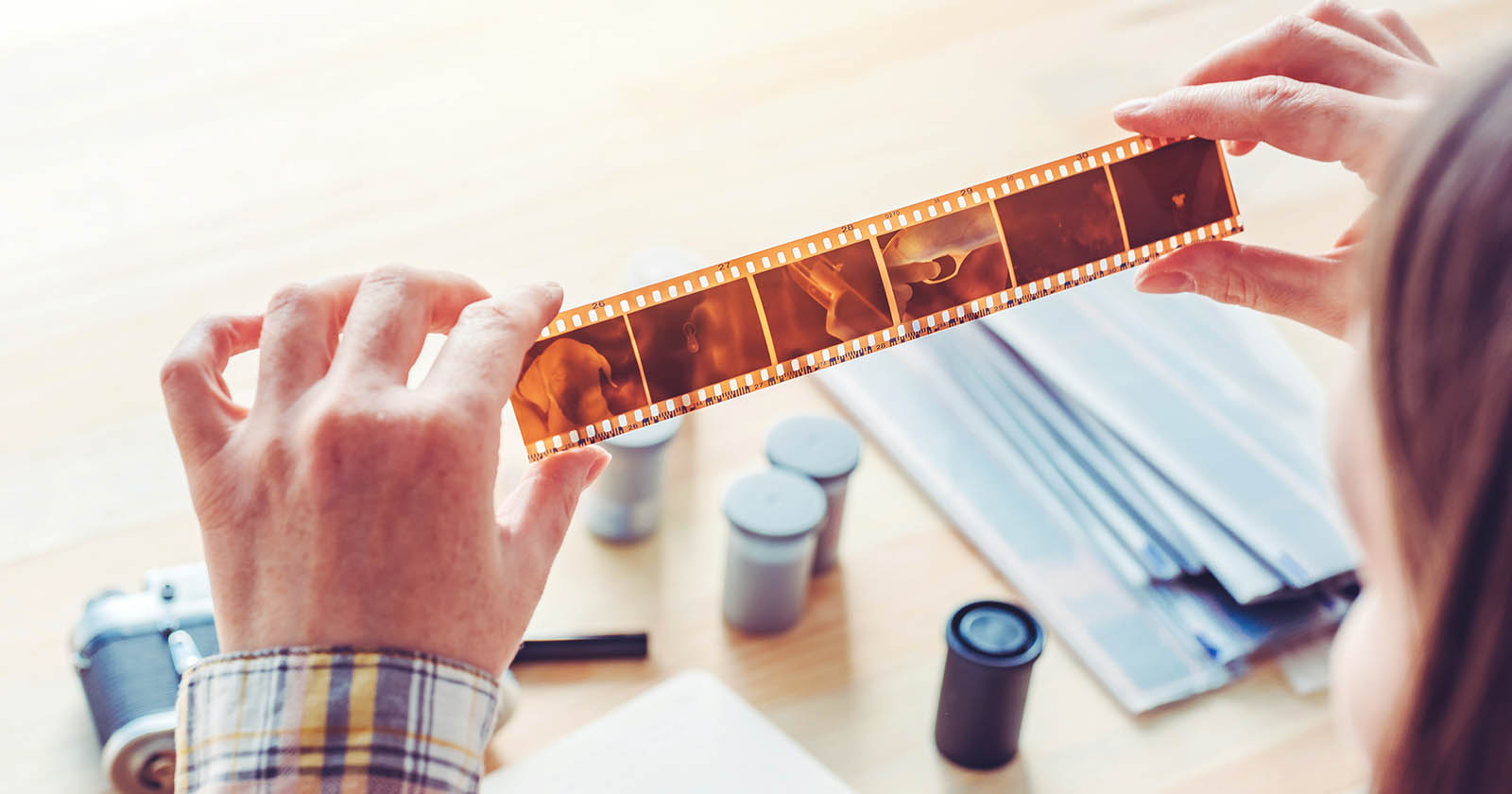
Where to Develop Film in 2025 | PetaPixel

The resurgence of the analog trend has many photo studios competing to offer premium services to anyone searching for Best Film Developing Near Me. The uniqueness of film’s results, its grain character, and warm color tones are an attraction that digital filters can’t replace. Therefore, the need for reliable services is the main reason many people search for Best Film Developing Near Me when looking to develop their photos.

Quality of Results That Distinguishes Professional Services

Many photographers choose Best Film Developing Near Me because professional services typically provide stable color consistency. Results produced by experienced studios are tested through precise chemical processes so that each frame appears with optimal color character. This reliability has made many novice and professional users increasingly confident in seeking Best Film Developing Near Me as their primary solution when developing film.

Furthermore, professional studios found through Best Film Developing Near Me typically have high-quality equipment, minimizing the potential for film damage. Analog film tends to be sensitive to light, temperature, and humidity, requiring proper management to avoid processing errors. Therefore, more and more people are entrusting their photos to the locations that appear when searching for Best Film Developing Near Me in their area.

Variety of Film Types Available

When someone searches for Best Film Developing Near Me, they generally want information about the types of film a studio can process. There are 35mm films, 120 medium format, and even E6 slide film, which require special chemical treatment. Locations listed as Best Film Developing Near Me typically have the ability to consistently process these various film types.

Furthermore, Best Film Developing Near Me services also generally offer high-resolution scanning capabilities. This process is essential for users who want to obtain digital versions of their photos without losing detail. Therefore, the existence of various service options is a strong reason why many analog photographers often search for the Best Film Developing Near Me before deciding on the right place.

Service Speed and Efficiency

One of the main reasons people search for the Best Film Developing Near Me is the need for speed of service. Many studios now offer fast processing times without sacrificing quality. This speed is a plus, especially for professional photographers who have deadlines and rely heavily on the services of Best Film Developing Near Me to maintain an efficient photography workflow.

Another efficiency offered by Best Film Developing Near Me is the ease of digital delivery. Once the film is scanned, the results can be sent directly via email or a cloud platform, eliminating the need for users to return to the studio. This makes the experience of searching for the Best Film Developing Near Me even more convenient, especially for those with busy schedules.

Price Comparison and Service Transparency

When discussing the Best Film Developing Near Me, price is also an important consideration. Each studio has different rates depending on the type of process, scan quality, and print size requested. Users often compare studios found in the Best Film Developing Near Me search to ensure the service they choose is worth the cost.

Price transparency is also a hallmark of a place worthy of the title of Best Film Developing Near Me. Many reputable studios provide a complete price list, including additional charges for damaged film or special treatment. This way, users don’t need to worry about hidden costs and can make an objective decision based on their search for “Best Film Developing Near Me.”

Tips for Choosing the Best Film Development Center

To find the Best Film Developing Center Near Me, users should consider the studio’s reputation through customer reviews. Honest reviews can provide an overview of the quality of service, speed of work, and the level of satisfaction of other users. By combining information from these reviews, making the decision to choose the Best Film Developing Center Near Me will be easier and more accurate.

In addition to reviews, it’s also important to pay attention to the communication and customer service provided by the locations listed in the “Best Film Developing Center Near Me” search. Responsive and friendly studios typically provide a sense of security, especially for beginners learning the ropes of analog photography. By choosing the right location through “Best Film Developing Center Near Me,” your film development experience will be more comfortable and produce the best photos from every analog shot.

Best Film Composers of All Time

John Williams and the Enduring Legacy of Film Music

John Williams’ orchestral prowess makes him one of the most influential figures on the list of Greatest Film Composers of All Time, primarily due to his ability to create themes that instantly resonate. His scores for Star Wars, Jurassic Park, and Indiana Jones symbolize how composition can shape both the visual and emotional identity of a film. With a dynamic cinematic approach, Williams blends classical harmonies with a heroic touch that keeps him timelessly relevant. The impact of his works demonstrates how the Greatest Film Composers of All Time are born from a blend of creativity and musical precision.

Williams’ influence is also felt in his musical style, which is often imitated by many modern orchestrators, making him a key reference for a new generation aspiring to join the ranks of the Greatest Film Composers of All Time. His majestic orchestrations, consistent use of leitmotifs, and technique for building tension give each film he worked on a unique identity. When John Williams’ name appears in the opening credits, audiences already know the film will be of high musical quality. With his monumental works, he remains rightfully considered one of the Greatest Film Composers of All Time.

Hans Zimmer and the Modern Music Revolution

Hans Zimmer is a major pioneer in the world of modern film music and deserves a place among the Greatest Film Composers of All Time thanks to his experimental style, blending traditional instruments with digital technology. Films like Inception, Interstellar, and Gladiator demonstrate his courage in creating new sound textures that enhance the atmosphere of the story. Zimmer not only creates melodies but also builds atmospheres that serve as the emotional foundation of the film. This approach has made his name synonymous with the evolution of the Greatest Film Composers of All Time in the contemporary era.

Zimmer’s work continues to evolve with technology, making him a perennial figure on the list of Greatest Film Composers of All Time. He frequently collaborates with visionary directors, such as Christopher Nolan, to create intense and immersive audiovisual experiences. Zimmer’s signature rhythms, thumping bass lines, and minimalist harmonies have influenced countless younger performers. His dedication to expanding the boundaries of modern film music secures his position as one of the most innovative and influential Film Composers of All Time.

Ennio Morricone and the Iconic Touch of Italian Cinema

Ennio Morricone’s name is a symbol of genius among the Greatest Film Composers of All Time, thanks to his ability to convey emotion through simple yet characterful compositions. His music for Sergio Leone’s spaghetti westerns, such as The Good, the Bad, and the Ugly, gave the genre a new identity. Morricone combined whistles, unique vocals, and unusual instruments to create an inimitable dramatic atmosphere. His innovations earned him a place on the list of the Greatest Film Composers of All Time.

His long career proves that a strong musical style will be remembered for generations, making him one of the masters on the list of the Greatest Film Composers of All Time. Morricone worked not only on westerns but also on dramas, thrillers, and international romances. Each of his compositions displays a strong character that feels distinct from other amateurs. With over 500 works, he serves as a role model for many athletes who aspire to reach the level of the Greatest Film Composers of All Time through dedication and creativity.

Howard Shore and the Magnificent World of Fantasy

Howard Shore is widely recognized for his contributions to The Lord of the Rings trilogy, making him a key figure among the Best Film Composers of All Time. His music blends orchestral elements with influences from the fictional cultures of Middle-earth, creating a world that sounds vibrant and authentic. Shore successfully creates a strong musical identity for each nation in the story, enhancing the film’s immersion. His success in creating an epic atmosphere solidifies his position among the Best Film Composers of All Time.

Beyond fantasy works, Shore is also known for creating dark and psychological scores for David Cronenberg’s films, demonstrating the versatility necessary to be considered a member of the Best Film Composers of All Time. His skill in blending traditional orchestral music with experimental elements creates a distinctive signature. The combination of soft sonic textures and mysterious harmonies imbues each film he works on with emotional depth. His consistent high-quality work keeps him relevant in discussions about the Best Film Composers of All Time.

Danny Elfman and His Unique Gothic Fantasy Style

Danny Elfman has long been known for his gothic and eccentric musical style, making him a standout name on the list of the Best Film Composers of All Time. His collaborations with Tim Burton have resulted in numerous films with strong identities, such as Edward Scissorhands, Batman, and The Nightmare Before Christmas. Elfman’s music creates a dark yet warm atmosphere, full of characters that are instantly recognizable to audiences. This unique style makes him a worthy inclusion on the list of the Best Film Composers of All Time.

Elfman has also demonstrated an extraordinary ability to create high-energy music for action and animated films, expanding his reach into the realm of the Best Film Composers of All Time. He often explores fast-paced rhythms, unusual harmonies, and dramatic choral vocals to create fantastical atmospheres. The dramatic power of his music has made many directors eager to work with him to create unique cinematic experiences. With his consistently distinctive style, Elfman maintains his place on the list of the Best Film Composers of All Time.

James Newton Howard and Profound Cinematic Emotion

James Newton Howard is a versatile composer whose work spans across genres, placing him among the Best Film Composers of All Time. In films like The Hunger Games, King Kong, and The Village, Howard demonstrates that music can draw the audience closer to the heart of the story. He frequently uses soft piano, emotional strings, and atmospheric elements to create narrative depth. His sensitivity to story dynamics makes him one of the Best Film Composers of All Time, focusing on the power of emotion.

He is also known as a composer who can quickly adapt to a director’s style, a crucial skill for being included in the Best Film Composers of All Time. Howard often blends traditional orchestral music with modern synthetic sounds to bring a fresh feel to each of his projects. His mature and detailed approach makes his works memorable and appreciated by critics and film fans alike. With his extensive experience and high-quality work, Howard deserves a place on the list of the Best Film Composers of All Time.

Best Film Developing

Understanding the Basic Concepts of Best Film Developing

In the world of analog photography, understanding the basic concepts of Best Film Developing is a crucial first step for anyone seeking the best possible image results. Many beginning photographers don’t realize that the quality of the final product is greatly influenced by the chemical processes that occur in the darkroom. As one begins to delve deeper into this process, they will understand that small details such as temperature, soaking time, and chemical quality have a significant impact on the visual character of a photograph. Therefore, understanding how Best Film Developing works from the outset can make the analog experience much more satisfying.

Furthermore, a thorough understanding of Best Film Developing also helps photographers determine the type of visual style they want to achieve. Each film, both color and black-and-white, responds differently to the developing process. Some photographers desire strong contrast, while others prefer soft tones and fine grain. The choice of developer, agitation technique, and soaking time are all part of the creative control that can be learned through Best Film Developing, ensuring each process produces a visual character consistent with the user’s preferences.

Essential Equipment for Best Film Developing

To perform Best Film Developing with professional results, the right equipment is the foundation of the entire process. Some essential tools include a developing tank, film reel, thermometer, timer, and chemicals such as developer, stop bath, and fixer. When someone uses the right equipment, the possibility of errors is minimized. For example, a good-quality reel makes it easy to load the film without the risk of jamming or scratching, while a thermometer ensures the chemical temperature is within the ideal range. All of these aspects are crucial elements in ensuring Best Film Developing runs smoothly.

Furthermore, the use of equally important supporting equipment such as gloves, funnels, measuring cups, and a secure storage space also contributes to the smooth running of Best Film Developing. Experienced photographers always ensure that the work area is dust-free, that lighting does not leak into the film chamber, and that chemicals are stored properly. The tidiness of the equipment and the quality of the materials used are crucial for the success of each developing process. The more organized the work area, the more optimal the Best Film Developing process will be, resulting in high-quality photographs.

Wet Process Techniques in Best Film Developing

The wet process is the core of Best Film Developing because it involves the direct interaction between the film emulsion and the developing chemicals. At this stage, the finished film is immersed in the developer for a specific amount of time, as directed by the film type. Consistent agitation settings are crucial for the quality of the final image. Too much agitation can create too much contrast, while too little can cause certain areas to develop unevenly. Therefore, photographers need to master a steady agitation rhythm to ensure Best Film Developing achieves the desired visual effect.

Once the main development process is complete, the next step is the stop bath, which quickly halts the chemical reaction. This process helps prevent overdevelopment, which can damage the details of the photo. The film is then immersed in a fixer to permanently fix the printed image. Precision in each step is key to successful Best Film Developing. When all steps are performed correctly, the film will produce sharp visuals, possessing clearer details, and capturing the aesthetic qualities typical of analog photography.

The Influence of Temperature and Time in Best Film Developing

Temperature is one of the most critical variables in Best Film Developing because it affects the speed of the chemical reaction. If the temperature is too high, the film can be “overdeveloped,” resulting in excessive contrast and coarse grain. Conversely, if the temperature is too low, the process will be slow and can result in a pale or underdeveloped image. Therefore, most guides recommend a temperature of around 20°C as the ideal standard. The ability to maintain a consistent temperature is an essential skill in Best Film Developing.

In addition to temperature, development time also determines the final result. Each type of film has different characteristics, requiring a specific development time. For example, high-contrast black-and-white film may require a shorter development time, while low-contrast film may require a longer time. Correct timing ensures that the Best Film Developing results remain stable and meet the photographer’s visual needs. Maintaining accurate timing using a timer helps create a consistent workflow so that each roll of film produces the best results.

Creativity in Best Film Developing

One of the main advantages of analog photography is the vast scope for creative exploration, including in the practice of Best Film Developing. Many photographers experiment with techniques like push and pull processing to achieve unique visual characteristics. Push processing treats the film like a higher ISO, resulting in a more contrasty image. Conversely, pull processing produces a softer, finer-grained image. This kind of experimentation can provide new experiences and enrich both technical skills and creativity in Best Film Developing.

In addition to push and pull techniques, some photographers try alternative chemical variations, such as stand developing, which doesn’t require regular agitation. This method is often used to produce softer contrasts and richer shadow details. Practices like this demonstrate that Best Film Developing isn’t just about following procedures, but rather an art form that allows ample room for experimentation. Every small change in the process can make a big difference in visual aesthetics, making creativity an integral part of the analog experience.

Care and Storage of Best Film Developing

Once the film is developed, the next step is to care for and store the resulting Best Film Developing to prevent its quality from deteriorating over time. The dried negatives should be stored in special sleeves made of acid-free plastic or archival paper. Proper storage prevents dust, scratches, or moisture from damaging the film’s surface. Because analog processes produce a physical archive, long-term preservation is crucial. Best Film Developing will yield more valuable results if the film negative is maintained in optimal condition.

Besides storage, the digitization process is also crucial for modern users. Many photographers scan their Best Film Developed negatives for digital editing or use. Scan quality is influenced by the cleanliness of the film, the quality of the scanner, and how the negative is physically handled. Properly developed scans will be sharper and easier to process. Therefore, negative care is an integral part of the Best Film Developing workflow and helps create a photo archive that can be enjoyed for a long time.

Cast of Nothing But the Best Film: A Complete Guide to the Iconic British Dark Comedy

The cast of Nothing But the Best film has long been a focal point for classic-movie enthusiasts who adore sharp British satire wrapped inside a clever narrative. Released in 1964, this black-comedy drama continues to attract attention not only for its witty story but for the actors whose performances elevated the film into a timeless piece of cinema. In this article, we explore the cast members, their roles, their careers, and how their chemistry shaped the movie’s legacy.

The Legacy of the Cast of Nothing But the Best Film

When discussing the legacy of the cast of Nothing But the Best film, it becomes clear that each performer brought a unique style that defined the storytelling. Their ability to balance humor with darker social commentary made the film stand out in its era. The actors helped transform what could have been a simple satire into a sophisticated critique of ambition and social class.

Tom Courtenay as James: The Heart of the Cast of Nothing But the Best Film

At the center of the cast of Nothing But the Best film is Tom Courtenay, who plays James, an ambitious young man working in a London real-estate firm. Courtenay’s interpretation of the character—a cunning, determined outsider hungry for success—gives the story emotional weight. His nuanced performance captures both the charm and ruthlessness of a man willing to do anything to climb the social ladder.

A Look at Tom Courtenay’s Career Beyond the Cast of Nothing But the Best Film

Tom Courtenay’s career outside the cast of Nothing But the Best film is filled with celebrated performances in British cinema. Known for his distinctive expressions and naturalistic acting, he starred in iconic titles like The Loneliness of the Long-Distance Runner and Doctor Zhivago. His ability to portray complex working-class characters helped cement his status as one of Britain’s finest actors.

Michael Young’s Role as the Mentor in the Cast of Nothing But the Best Film

Another key performer in the cast of Nothing But the Best film is Michael Young, who plays Charles, the worldly mentor who teaches James how to navigate high society. His polished demeanor and effortless charisma contrast sharply with James’s rough edges, creating a dynamic classroom of social maneuvering. Young’s role becomes essential, as he symbolizes the elite world James wants to master.

How Michael Young Complements the Cast of Nothing But the Best Film

Within the cast of Nothing But the Best film, Michael Young delivers a refined but humorous performance that elevates the story’s satirical tone. His presence adds sophistication, and his chemistry with Courtenay strengthens the mentor-student dynamic, which becomes the foundation of the plot.

Denholm Elliott: A Powerful Supporting Force in the Cast of Nothing But the Best Film

Denholm Elliott brings additional depth to the cast of Nothing But the Best film with his role as the boss’s privileged but incompetent son. Elliott—known for his later roles in Raiders of the Lost Ark and A Room with a View—adds both humor and tension. His character represents the entitled class James envies, making their interactions particularly impactful.

Why Denholm Elliott’s Performance Stands Out in the Cast of Nothing But the Best Film

Among the cast of Nothing But the Best film, Denholm Elliott stands out for his expert blend of comedy and vulnerability. While his character often appears foolish, Elliott manages to evoke sympathy, reminding audiences that privilege doesn’t always equal happiness or competence.

The Women Behind the Cast of Nothing But the Best Film

The cast of Nothing But the Best film also includes talented actresses who add emotional balance to the story. They portray the women who influence James’s decisions—some challenging him, and others shaping his ambitions. Their presence completes the narrative, making the satire not only about men and status but also about relationships and social expectations.

Millicent Martin as Ann: A Key Figure in the Cast of Nothing But the Best Film

Millicent Martin contributes significantly to the cast of Nothing But the Best film as Ann, the boss’s daughter and the symbol of the high society James wants to enter. Her performance brings elegance and emotional complexity to the film. Martin portrays Ann as more than just a romantic interest—she becomes a reflection of the social world James longs for.

Why Ann’s Role Shapes the Cast of Nothing But the Best Film

Ann’s role within the cast of Nothing But the Best film highlights the tension between genuine affection and strategic ambition. Her character complicates James’s journey, forcing him to confront what he is truly willing to sacrifice for success.

Allan Cuthbertson’s Authority in the Cast of Nothing But the Best Film

Playing Ann’s father, Allan Cuthbertson adds authority and sophistication to the cast of Nothing But the Best film. His portrayal of the wealthy businessman exudes confidence and power, forming the intimidating barrier James must overcome. Cuthbertson’s performance perfectly embodies the elite British patriarchy of the era.

How Supporting Actors Strengthen the Cast of Nothing But the Best Film

The supporting members of the cast of Nothing But the Best film deliver subtle yet crucial contributions. Their roles, though smaller, create realism and texture. Whether portraying co-workers, party guests, or social elites, they enhance the world-building that makes the film believable and enjoyable.

Chemistry Within the Cast of Nothing But the Best Film

The chemistry among the cast of Nothing But the Best film is one of the reasons the movie remains so beloved. The actors bounce off each other’s energy with perfect timing, creating humor and tension simultaneously. Their interactions feel organic, elevating the film’s sharp dialogue and clever scenes.

How the Cast of Nothing But the Best Film Brings the Story to Life

The effectiveness of the cast of Nothing But the Best film lies in how they bring characters to life with authenticity. Their performances make the satire resonate as they reveal the absurdity of blind ambition and social climbing. Without this talented cast, the film’s message would not be nearly as powerful.

Impact of the Cast of Nothing But the Best Film on British Cinema

The influence of the cast of Nothing But the Best film extends beyond this single production. Many of the actors went on to shape British cinema through iconic roles. Their success serves as proof of the film’s exceptional casting choices and its importance in classic film history.

Why the Cast of Nothing But the Best Film Still Matters Today

The reason the cast of Nothing But the Best film remains relevant is its timeless portrayal of ambition, class, and human nature. Audiences today can still relate to the themes—and the actors’ performances ensure the story continues to resonate with modern viewers.

Final Thoughts on the Cast of Nothing But the Best Film

In conclusion, the cast of Nothing But the Best film is the backbone that makes this 1964 dark comedy unforgettable. Their performances, chemistry, and dedication helped transform the movie into a classic. Whether you’re a casual viewer or a devoted film enthusiast, studying this cast offers a deeper appreciation of how great acting can elevate storytelling.

Best Film Camera for Travel: Timeless Gear for Capturing Your Adventures

Choosing the best film camera for travel can transform the way you capture your journeys. While digital cameras dominate today’s photography world, many travelers still prefer film cameras because of their nostalgic charm, unique tones, and the thrill of shooting with intention. The right camera makes traveling more memorable, and finding the best film camera for travel helps ensure every frame feels magical.

Why Choose a Film Camera for Travel?

Many photographers search for the best film camera for travel because film delivers a distinctive look that digital filters cannot replicate. Film photos have warmth, grain, and depth that enhance landscapes, street moments, and portraits. Additionally, using film encourages slower, more thoughtful shooting, helping travelers appreciate each destination.

When discussing the best film camera for travel, simplicity is another advantage. A good film camera doesn’t require charging, updating, or navigating complicated menus. For backpackers, hikers, and city explorers, this reliability makes film cameras an appealing companion.

Qualities to Look For in the Best Film Camera for Travel

Before choosing the best film camera for travel, travelers must consider weight, durability, lens options, and availability of spare parts. Traveling often means rough handling, so a sturdy body is essential. Lightweight models reduce strain during long walks, while interchangeable lenses offer flexibility for different scenes.
Another key factor in selecting the best film camera for travel is ease of use. Cameras with manual settings help beginners learn exposure, while point-and-shoot models are great for quick snapshots. The availability of film and batteries should also be considered when picking the best film camera for travel.

Olympus Trip 35 – A Classic Candidate for Best Film Camera for Travel

The Olympus Trip 35 is frequently recommended as the best film camera for travel thanks to its compact size and effortless operation. It runs entirely on solar-powered metering, meaning no batteries are required—ideal for long trips. The 40mm lens captures sharp images with beautiful contrast, perfect for street photography and landscapes.

Because of these strengths, many photographers consider the Olympus Trip 35 a top contender for the best film camera for travel, especially for those who want simplicity without sacrificing quality.

Canon AE-1 Program – A Versatile Best Film Camera for Travel

The Canon AE-1 Program remains a favorite among travelers seeking the best film camera for travel. This SLR offers manual controls and program mode, giving users flexibility based on their skill level. Its FD lenses are affordable and deliver impressive optical quality, making it great for portraits, architecture, and nature shots.

Its reliability and ergonomic design make the AE-1 Program a strong choice for anyone wanting the best film camera for travel with full control over photography.

Pentax K1000 – A Beginner-Friendly Best Film Camera for Travel

The Pentax K1000 is legendary for being simple, durable, and easy to learn, which is why many consider it the best film camera for travel for beginners. With a robust metal body and fully manual functions, this camera teaches travelers to master exposure and composition.

Its affordability and compatibility with numerous Pentax lenses further strengthen its position as the best film camera for travel for new photographers exploring analog photography.

Fujifilm Klasse S – A Premium Best Film Camera for Travel

If you want a luxury point-and-shoot, the Fujifilm Klasse S is often regarded as the best film camera for travel. With a fast 38mm f/2.8 lens, refined metering system, and compact body, it provides sharp images with minimal effort. Though pricier than other options, its performance is exceptional.
Many professionals searching for the best film camera for travel appreciate the Klasse S for its balance of portability and premium image quality.

Contax T2 – A Fashionable Best Film Camera for Travel

The Contax T2 has become iconic among travelers wanting the best film camera for travel due to its titanium body, crisp Carl Zeiss lens, and sleek design. It’s highly portable and delivers beautiful color rendering and micro-contrast—perfect for capturing vibrant cities and natural scenes.
Though expensive, enthusiasts still consider it one of the best film camera for travel because of its reliability and stunning lens performance.

Kodak Ektar H35 – A Fun Half-Frame Best Film Camera for Travel

For budget-friendly shooting, the Kodak Ektar H35 is often listed as the best film camera for travel. As a half-frame camera, it doubles the number of shots per roll, making it economical for long trips. Its small plastic body is lightweight and perfect for casual snapshots.
This creative and fun camera is an excellent choice for travelers seeking the best film camera for travel with playful results and low-cost shooting.

Tips for Using the Best Film Camera for Travel

Once you’ve selected your best film camera for travel, preparation is key. Always carry extra film rolls, especially if traveling to remote locations. Consider bringing a protective pouch to prevent damage during hikes or transit.

To maximize results with the best film camera for travel, choose the right film stock. Portra is great for portraits, Ektar works well for landscapes, and black-and-white films are excellent for atmospheric street photography. Learning basic exposure settings will also help you get the best images from your best film camera for travel.

The Benefits of Traveling With the Best Film Camera for Travel

Using the best film camera for travel adds excitement and nostalgia to your adventures. Every click feels intentional, and the anticipation of waiting for film developing makes the experience more meaningful. Many travelers say their memories feel more vivid when captured on film.

Another benefit of the best film camera for travel is its timeless aesthetic. The grain, tones, and dynamic range of film offer a unique storytelling style that brings destinations to life in a way digital photos often can’t replicate.

Conclusion

Choosing the best film camera for travel depends on your style, experience, and budget. Whether you prefer a simple point-and-shoot or a manual SLR, the right camera will help you capture unforgettable moments in a classic and artistic way. With thoughtful preparation and a passion for exploration, your journey becomes even more special when seen through the lens of the best film camera for travel.

Best Film Schools In The World

American Film Institute (AFI) Conservatory, United States

The American Film Institute Conservatory is one of the Best Film Schools in the World, located in Los Angeles, the heart of the global entertainment industry. AFI is renowned for its master’s-level conservatory program, where students focus on areas such as directing, screenwriting, producing, editing, cinematography, and production design. The school has produced numerous award-winning filmmakers whose work has dominated Hollywood and international festivals.

Students at AFI enjoy a collaborative environment that mimics the professional filmmaking process. Each project is worked on in teams like a real film crew, providing invaluable practical experience. Schools like the Best Film Schools in the World emphasize that the core of all film production is the power of storytelling, which can move audiences emotionally and intellectually.

London Film School (LFS), United Kingdom

Among the Best Film Schools in the World, London Film School is one of the oldest and most prestigious film institutions. Founded in 1956, LFS offers graduate programs that attract students from over sixty countries. This school is renowned for its hands-on approach to learning, where students are given the opportunity to work with film and digital formats while experimenting with a variety of genres and styles.

LFS encourages creativity, collaboration, and critical thinking. Located in the heart of London’s vibrant arts scene, students have access to international film festivals, industry events, and a network of renowned filmmakers. Many of its alumni have won major awards. As one of the Best Film Schools in the World, LFS serves as a gateway for global talent seeking to build international careers in cinema.

National Film and Television School (NFTS), England

Another British gem on the list of Best Film Schools in the World is the National Film and Television School, located in Beaconsfield. NFTS has trained many successful professionals in the film and television industry. With over thirty specialized programs, the school covers areas such as directing, production, game design, visual effects, and animation.

NFTS is known for its industry-standard facilities, including studios, a dubbing theater, and a professional editing suite. The school also maintains close partnerships with major companies such as the BBC and Netflix, ensuring students gain both theoretical and practical experience. Schools like the Best Film Schools In The World focus on fostering innovation and collaboration so that their graduates are ready to face the dynamic competition of the entertainment world.

La Fémis, France

Located in Paris, La Fémis is ranked among the Best Film Schools in the World and is known for its highly selective admissions. Founded in 1943, the school has a strong reputation for academic excellence and artistic approach. Its curriculum emphasizes the artistic and technical aspects of filmmaking, offering programs in directing, screenwriting, sound, editing, production, and distribution.

La Fémis students are trained to understand the language of cinema and the cultural significance of each work. Many of its graduates have won awards at prestigious festivals like Cannes. As one of the Best Film Schools in the World, La Fémis balances the traditions of classic cinema with a spirit of exploration into new forms of filmmaking.

Tisch School of the Arts, New York University, United States

The Tisch School of the Arts at New York University is one of the Best Film Schools in the World and is renowned worldwide. Located in downtown New York City, Tisch offers undergraduate and graduate programs in film and television production, screenwriting, and cinema studies. The school’s alumni include big names like Martin Scorsese, Spike Lee, and Chloé Zhao.

Students at Tisch are encouraged to push the boundaries of creativity while mastering the technical aspects of modern cinema. Schools like Tisch, among the Best Film Schools in the World, offer high-tech facilities and mentorship from industry professionals. The New York City environment also provides real-world experiences and inspiration for students in understanding diverse cultures and storytelling styles.

University of Southern California (USC) School of Cinematic Arts, United States

The University of Southern California School of Cinematic Arts consistently ranks among the top Best Film Schools in the World. Located in Los Angeles, the school has strong relationships with major studios and international entertainment companies. USC offers comprehensive programs in film, television, interactive media, and animation.

USC’s uniqueness lies in the fusion of storytelling and cutting-edge technology. Students learn directly from faculty who are active practitioners in the industry, providing them with a valuable opportunity to connect with the professional world. As part of the Best Film Schools in the World, USC has produced many legendary filmmakers and continues to be a center of innovation in the global film industry.

Beijing Film Academy (BFA), China

Beijing Film Academy also holds a prominent position among the Best Film Schools in the World, particularly as the largest film education institution in Asia. Founded in 1950, the BFA has played a significant role in developing the Chinese film industry, producing many world-renowned directors, cinematographers, and actors.

The BFA curriculum combines artistic creativity with technical expertise through programs in directing, screenwriting, cinematography, and digital arts. As part of the Best Film Schools in the World, the BFA also provides opportunities for international students to study Eastern cinematic traditions as well as global trends. Its emphasis on visual beauty and narrative power has earned it respect in the world of film education.

Global Excellence in Film Education

From Los Angeles to Paris, from London to Beijing, all the institutions on the Best Film Schools in the World list share a common goal: to produce visionary artists capable of pushing the boundaries of cinematic creativity. Each school offers a unique approach—from the collaborative system at AFI, to the artistic experimentation at LFS, to the industry-driven innovation at USC.

The journey to becoming a filmmaker may be challenging, but these schools are the foundation for those with a deep passion for the art of storytelling in moving images. The Best Film Schools In The World are more than just places to learn, they are inspiring spaces where dreams are formed, skills are honed, and future film legends are born.